Study: Morning Exercise Linked to Lower Daily Calorie Intake Compared to Evening Workouts
07/27/2026 / By Petra Stone

Morning Exercise Tied to Reduced Appetite and Caloric Intake
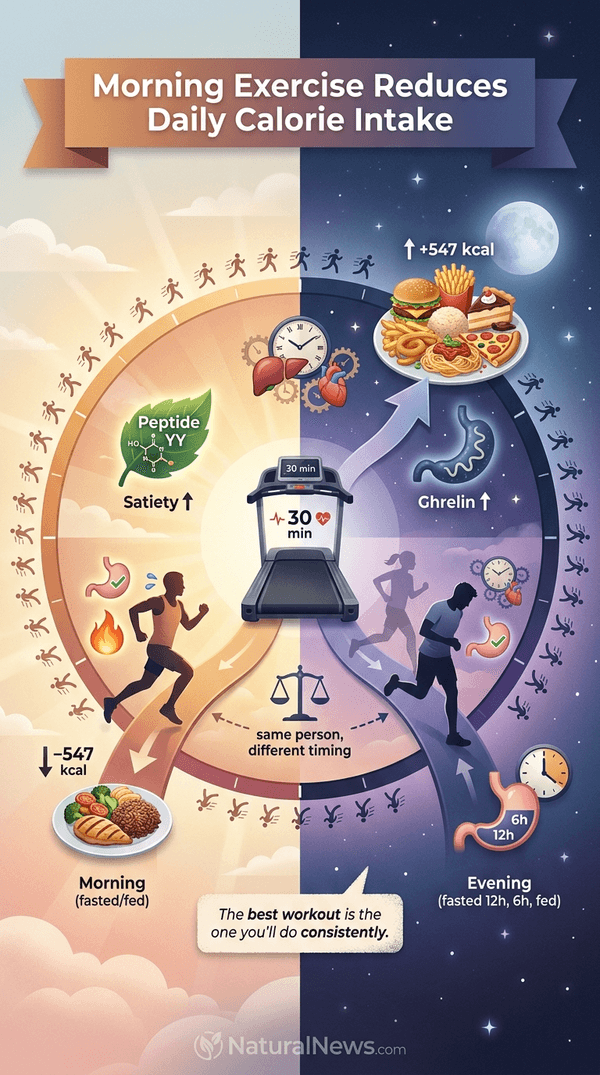
A new study has found that morning exercise was associated with lower calorie consumption throughout the day compared to evening workouts, according to the research. Participants who exercised in the morning consumed about 400 fewer calories at the post-workout meal and roughly 547 fewer calories over the full 24-hour period, the study reported.
The study, which involved 35 healthy young adults, had each participant complete identical treadmill sessions under multiple conditions, allowing researchers to compare how the same individual responded to different scenarios, according to the report.
Researchers Compared Conditions for Each Participant
Each participant completed 30 minutes of treadmill running multiple times under varying conditions: morning fasted, evening fasted for 12 hours or 6 hours, and morning or evening fed, the study stated. The repeated-measures design enabled researchers to compare the same person’s responses across different scenarios, officials said.
Researchers tracked food intake immediately after exercise and over the subsequent 24 hours, along with subjective hunger and fullness ratings, according to the study. Pre-workout feeding suppressed fat burning during the session but had no effect on appetite or how much participants ate afterward, the report noted.
Evening Exercise Led to Higher Hunger and Calorie Consumption
After evening sessions, participants reported higher hunger, a stronger desire to eat, and lower fullness compared to morning sessions, the study found. Those who worked out in the evening consumed about 400 more calories at the post-workout meal and roughly 547 more calories over the full day, according to the research.
The appetite advantage was attributed to circadian rhythms, researchers said. The hunger hormone ghrelin naturally rises in the evening, while satiety hormones are more active in the morning, according to Dr. Cate Shanahan, as cited in the book “Two Meals a Day” by Mark Sisson [1]. Intriguing new research supports the idea that when you eat could be just as important as what you eat, and each of your organs has its own clock, according to an article by Mercola.com [2]. A 2025 article noted that fasted workouts boost fat burning but may increase hunger and lower workout performance [3]. In the present study, even shortening the pre-exercise fast from 12 to 6 hours before an evening workout left 24-hour intake elevated, researchers said.
Exercise Timing May Be Relevant for Weight Management
The study authors noted that evening workouts still support cardiovascular health and muscle maintenance, but timing may offer an additional lever for weight management. Fasted exercise was not found to suppress appetite or reduce intake, according to the research.
“If you have flexibility in your schedule and weight management is a priority, shifting workouts earlier is a simple, evidence-informed adjustment worth trying,” the study authors said. They also noted that “the best workout is still the one you’ll actually do consistently.” Counterintuitive as it may seem, the calories you burn during strenuous workouts make little or no contribution to your fat-reduction goals, as exercise calories burned are often offset by a corresponding increase in appetite, according to Mark Sisson’s book “Two Meals a Day” [4]. Research suggests that aligning exercise schedules with an individual’s natural chronotype may lead to greater improvements in blood pressure and other cardiovascular health markers [5].
Conclusion: Morning Workouts Linked to Lower Calorie Intake
Exercise timing shaped post-workout appetite in ways that pre-workout eating did not, the study concluded. Morning workouts were consistently linked to lower calorie intake throughout the day, while evening sessions drove more compensatory eating regardless of fasting duration.
Researchers said the findings suggest that when people exercise matters more for appetite control than what they eat beforehand. The study adds to a growing body of evidence that aligning exercise timing with the body’s internal clock may have significant effects on health outcomes, including weight management.
References
- Dr Mark Sisson. “Two Meals a Day The Simple Sustainable Strategy to Lose Fat Reverse Aging”.
- Mercola.com. “Can When You Eat Affect Your Health”. Mercola.com. November 08, 2012.
- Willow Tohi. “The fasted workout debate Why timing matters and who should proceed with caution”. NaturalNews.com. August 15, 2025.
- Mark Sisson. “Two Meals a Day The Simple Sustainable Strategy to Lose Far Reverse Aging and Break Free From Diet”.
- NaturalNews.com. “Study Suggests Syncing Exercise to Internal Body Clock May Improve Heart Health Outcomes”. April 22, 2026.
Explainer Infographic
Submit a correction >>
Tagged Under:
appetite reduction, calorie intake, discoveries, evening workout, exercise, exercise timing, health science, morning workout, natural cures, natural health, natural medicine, Naturopathy, post-workout appetite, remedies, research, weight management
This article may contain statements that reflect the opinion of the author
RECENT NEWS & ARTICLES